Reko Rennie’s Revolution Renaissance
3 Dec 2025
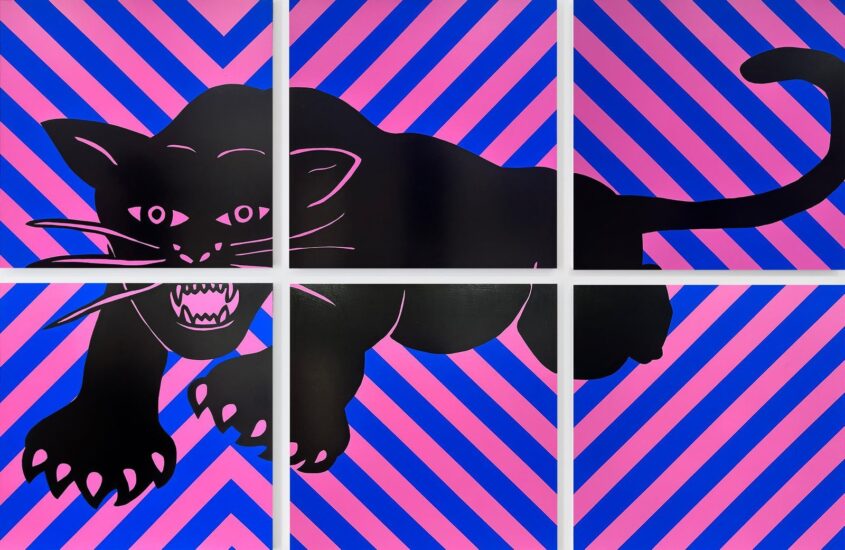
In interdisciplinary artist Reko Rennie’s most recent work Revolution Renaissance, a black panther bounds towards us from a backdrop of pink-and-blue diamond patterning. A reference to the iconography of the American civil rights movement and the artist’s Kamilaroi heritage, the work heralds a return to the need to protest. As he puts it, “there is a cultural revolution occurring once again in our societies, locally and internationally”. Revolution Renaissance continues the artist’s career-long interest in provoking discussion surrounding Indigenous culture in contemporary urban environments and subverting romantic ideologies of Aboriginal identity.
We ask the artist more about the work, its origins and resonances.
Where does your work get its bold colour and graphic quality?
I was born in 1974 and grew up making graffiti in Melbourne in the late 1980s and beyond. Colour and vibrancy have remained important aspects of my work.
My work is very graphic. I want a type of immediacy in it. I have also never wanted to conform to romanticised notions or stereotypes of Aboriginal art as just composed of this one- or two-dimensional viewpoints of lines and dots in ochre. Sure, that’s one aspect of our culture, but we are a very diverse group of nations with various cultural practices and identities that make up over 300 different groups.
I want my work to stand out and be noticed, and bold colours and graphic elements achieve this.
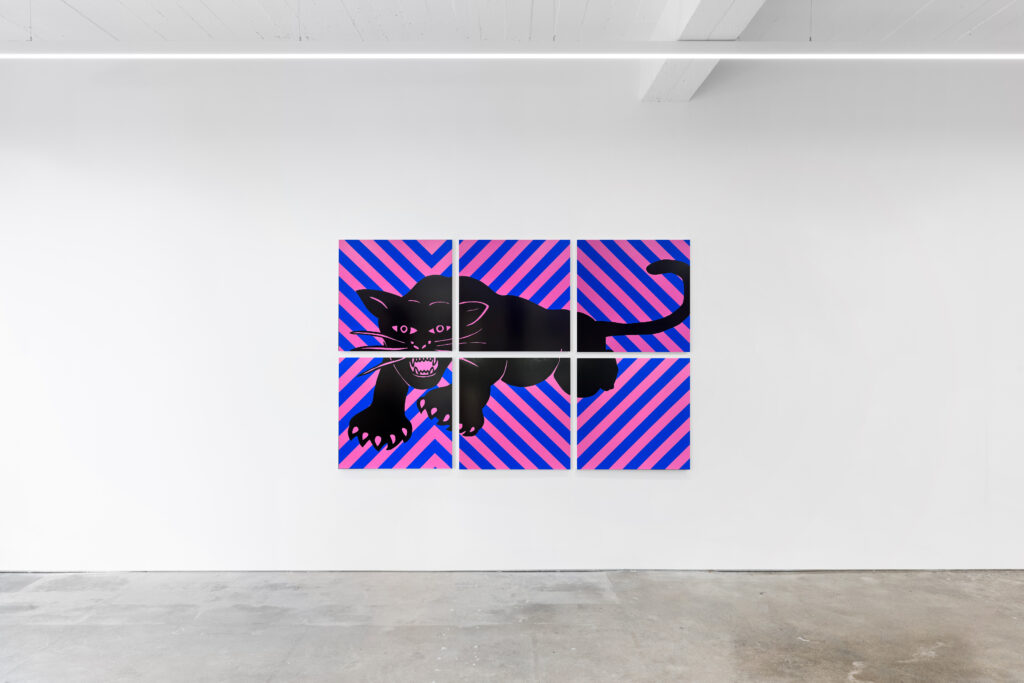
Installation view, Reko Rennie, Revolution Renaissance, 2025, 6 panels, Acrylic and pigment on linen, 100 cm x 100 cm each
Can you speak to the iconography in Revolution Renaissance?
The civil rights movement in the United States (1954-68) sparked a massive movement in Australia for Aboriginal rights and equality. One pivotal event during this time was The Freedom Ride, a 15-day journey undertaken by a group of non-Indigenous and Indigenous Australians in a bus across New South Wales, which went through my home country of Kamilaroi/Gamilaroi people in Walgett in 1965.
There were also several Aboriginal activists who visited the United States in the 1960s and met with members of the Black Panther Party. Back in Australia, we saw communities starting to stand up for equality, Aboriginal rights and later, the historic 1967 Australian referendum, during which Australians voted to change the Constitution, so that like all other Australians, Aboriginal and Torres Strait Islander peoples would be counted as part of the population. Until this occurred, my people were not even counted as citizens of their own country. Now think about that!
Resistance has always been a part of our identity, due to the former acts of the government. Thousands of Aboriginal children, now known as The Stolen Generations, were forcibly removed from their families and rehomed in Christian missions and government approved missions, for example, and suffered servitude and slave labour, up until the early 1970s.
The geometric patterning in my work represents my community. The diamond-shaped patterning is one of four male and female symbols to represent the Kamilaroi/Gamilaroi people. I use it in a contemporary format to pay homage to my cultural roots and pay respect to the past.
The use of the Black Panther Party logo in Revolution Renaissance, and the title, heralds a return of protesting our rights. In Australia, we have seen an ever-increasing rise and acceptance of ultra-nationalists, neo-Nazis and others spewing hate under the guise of free speech. These individuals are usually sanctioned by police, State and Federal governments. As a result, Aboriginal people are also taking back to the streets to protest these recent orchestrated events.
There is a cultural revolution occurring once again in our societies, locally and internationally. Equality and Rights will always transcend borders and countries.
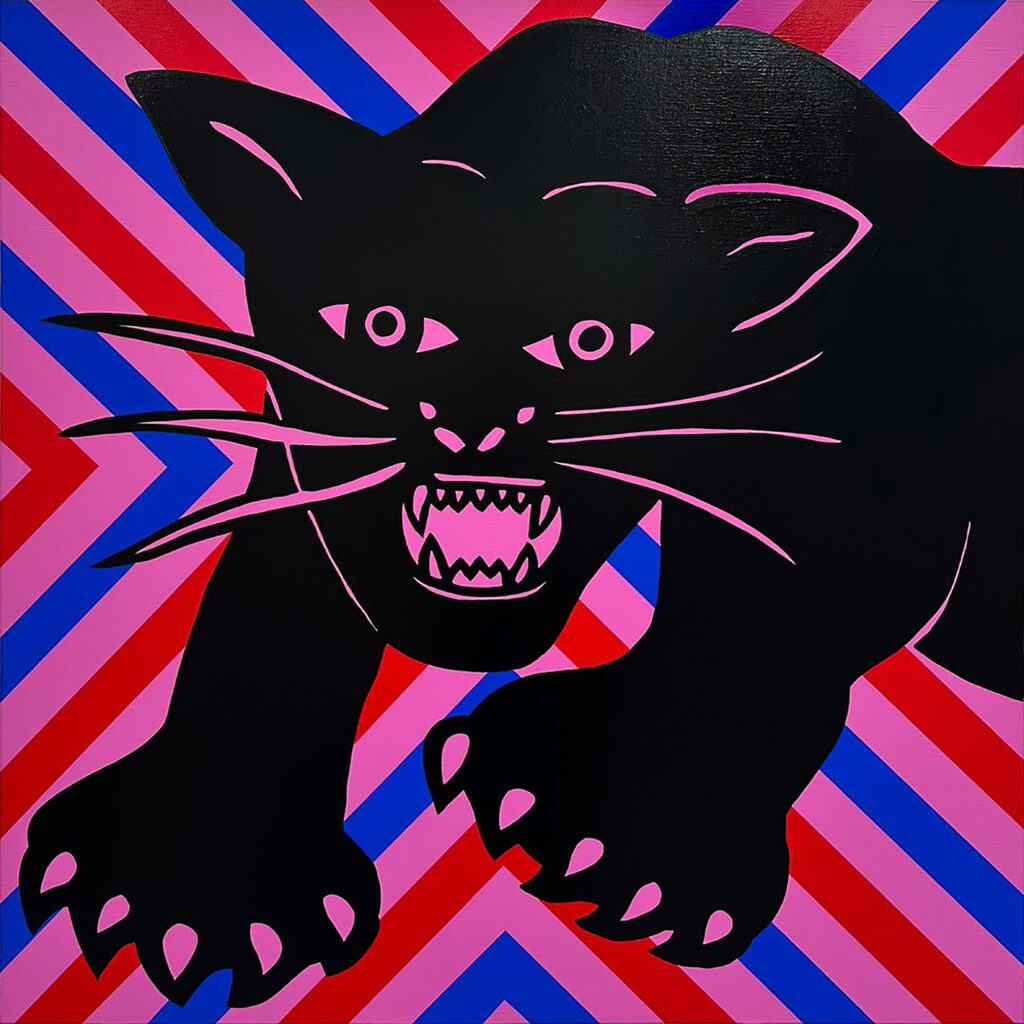
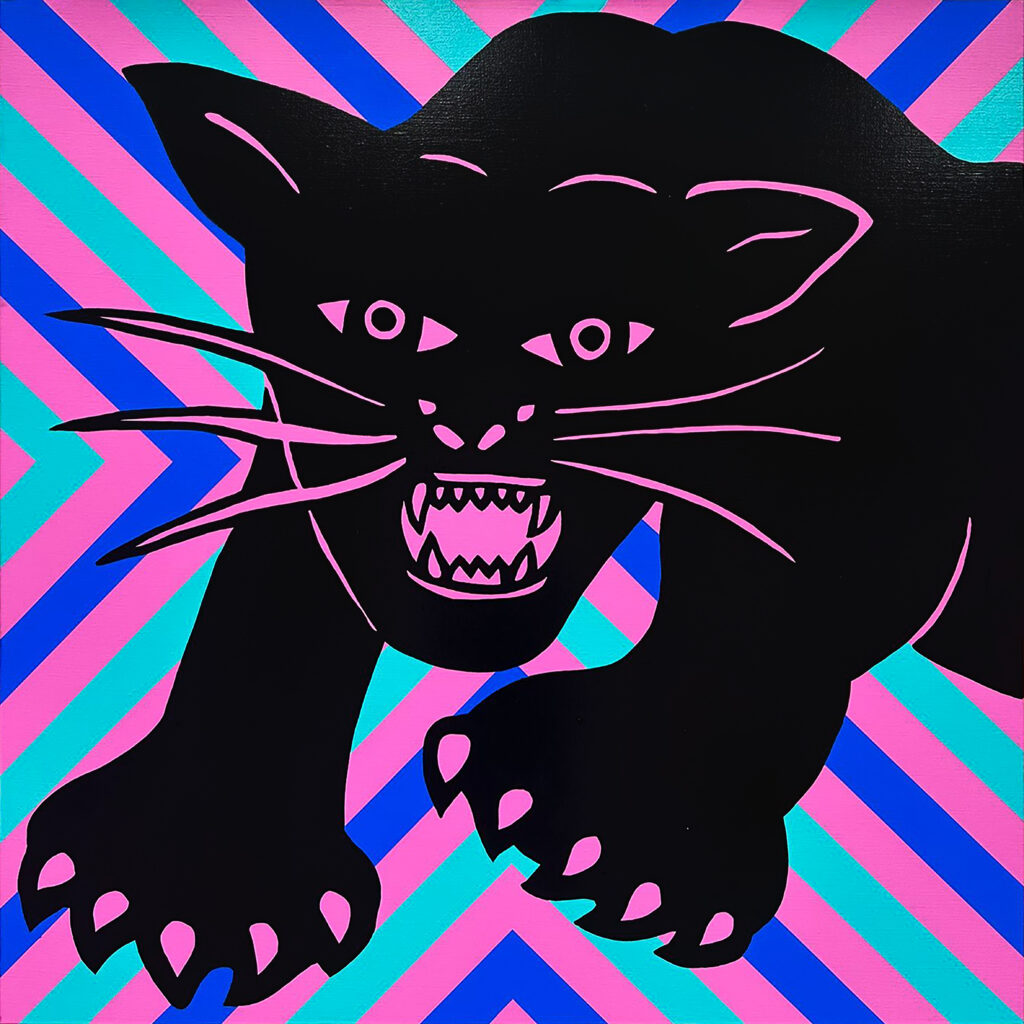
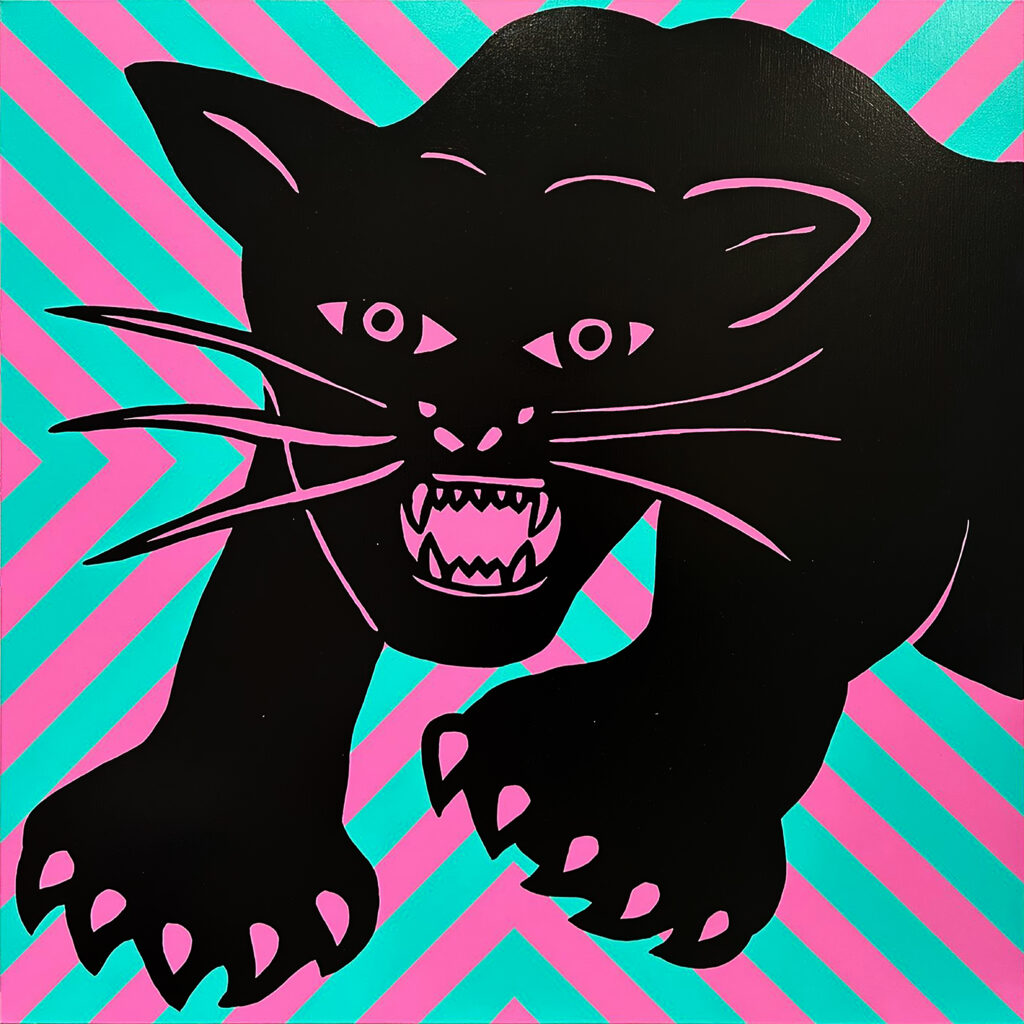
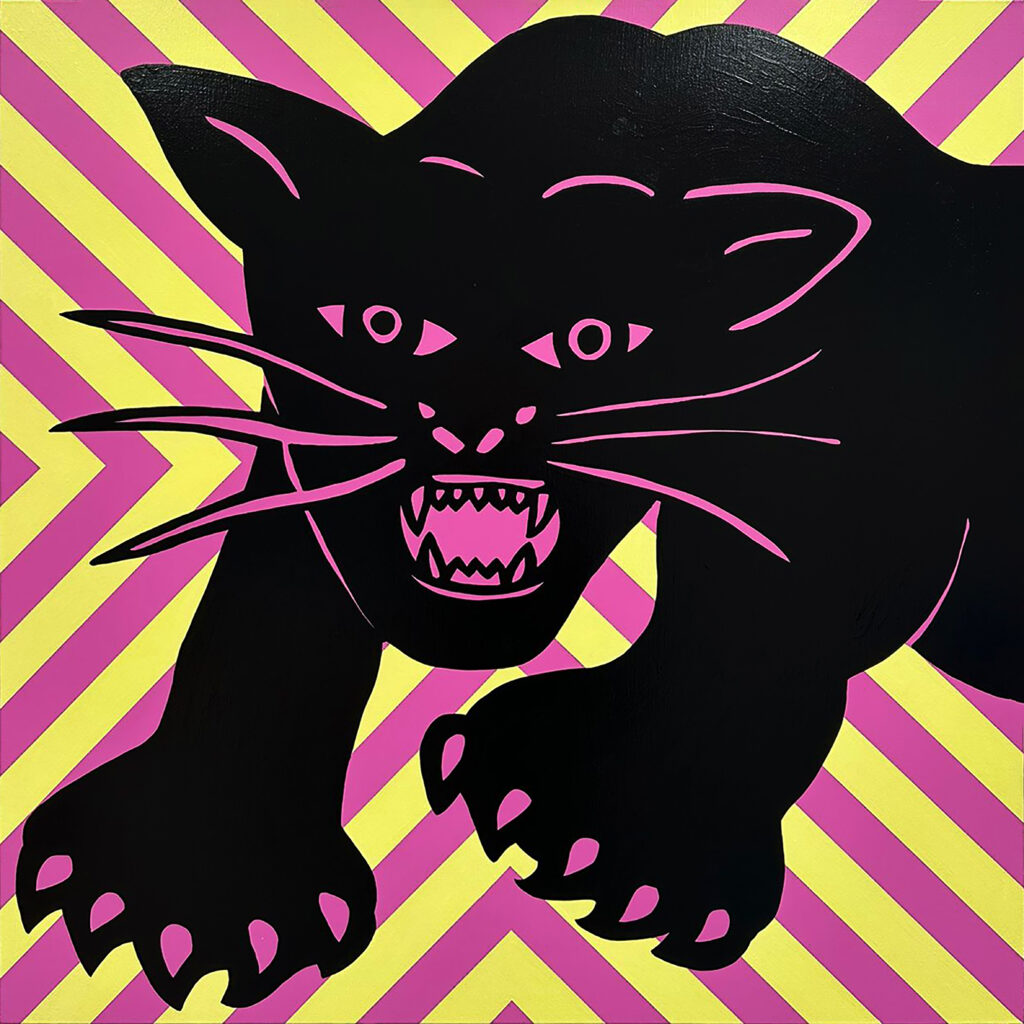
Reko Rennie, Revolution Renaissance, clockwise from top left: (red and blue), (cobalt teal and blue), (cobalt teal), (yellow), 2025, Acrylic and pigment on linen, 100cm x 100 cm each
What do you see as the role of contemporary art in making societal change?
Art has the power to raise awareness, inform and make profound statements. It is also a medium for the marginalised to have a voice. Any community or group of people who have had a history of being dispossessed of their land, culture and identity have a story to tell, and there will always be those who need to be reminded of the past, which is not easy to hear or accept.
Ames Yavuz is proud to present Reko Rennie’s six panel work, Revolution Renaissance (2025) at the ongoing Art Basel Miami Beach 2025.