For the inaugural edition of Art Basel Qatar, Galerie Lelong and Ames Yavuz are pleased to present Vessels, a solo presentation by Pinaree Sanpitak. Expanding her long-standing investigation of the vessel as both object and idea, this multidisciplinary presentation investigates the body, care, balance, and transformation. In the context of Art Basel Qatar’s theme of Becoming, curated by Artistic Director Wael Shawky, Sanpitak’s work proposes an alternate epistemology—one centered on the body as a system of sensing, adapting, and holding.
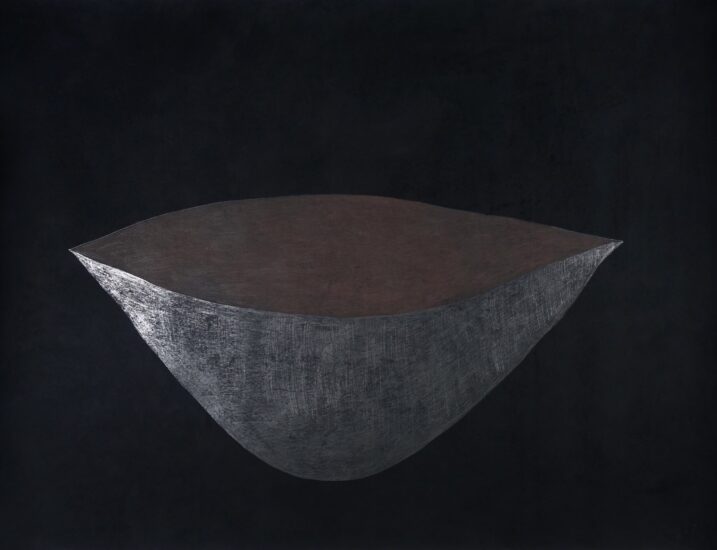
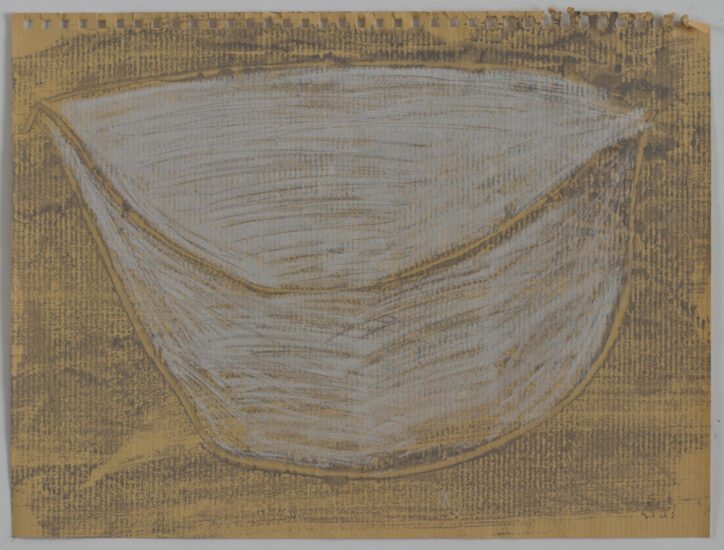
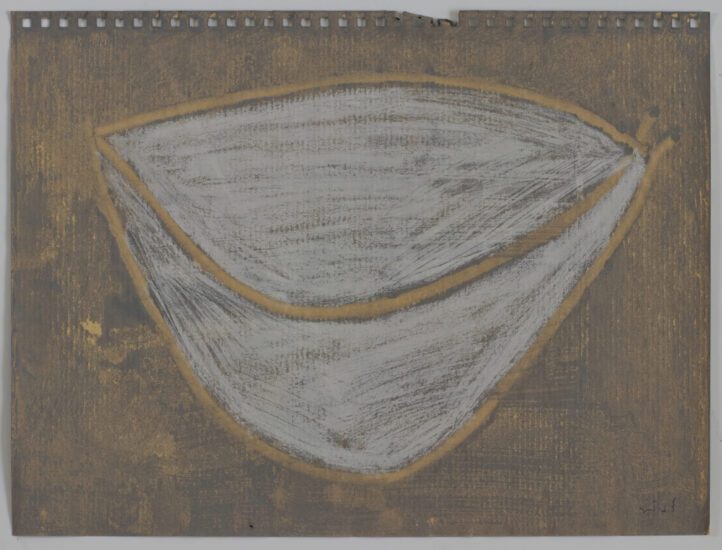
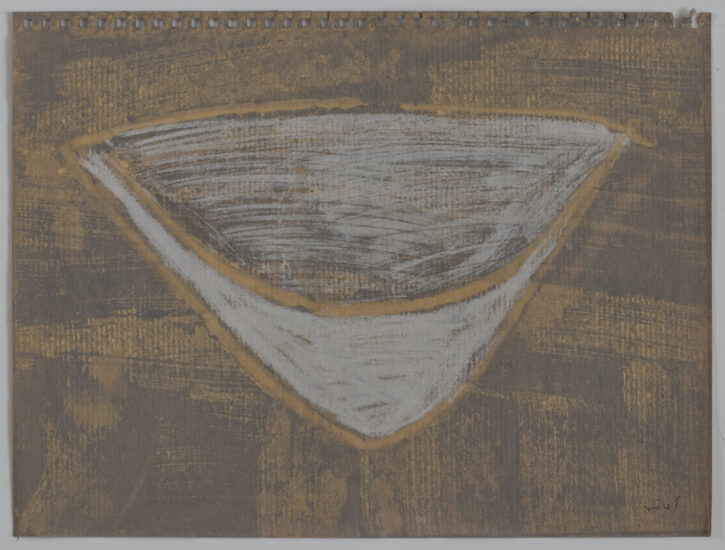
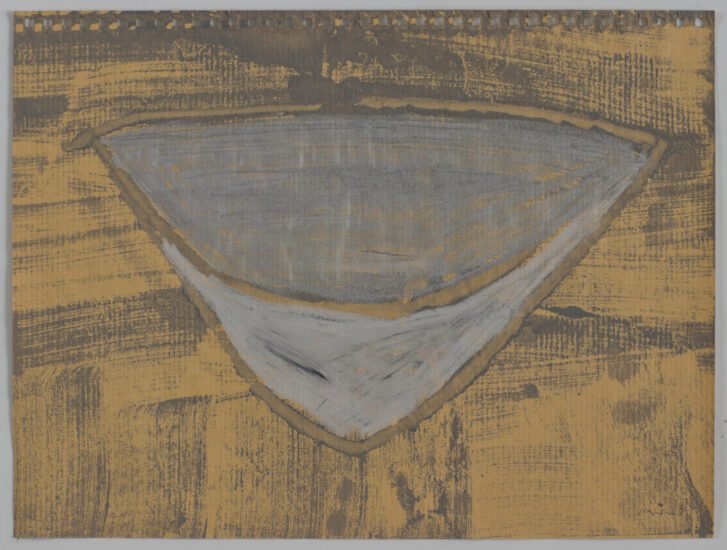
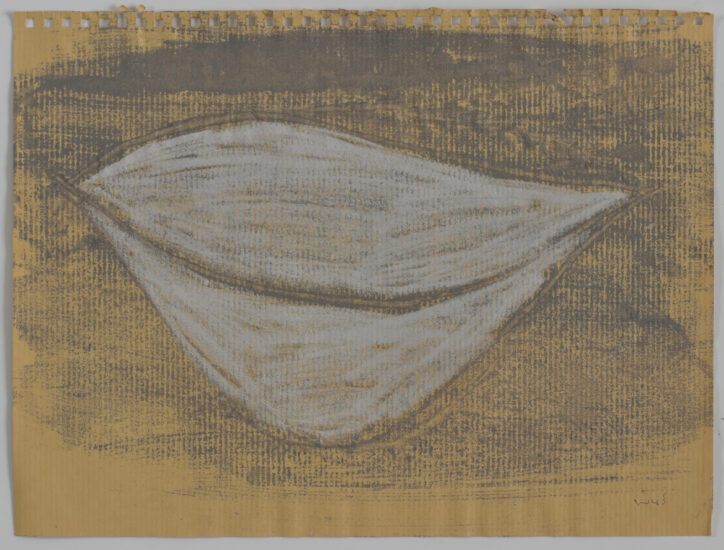
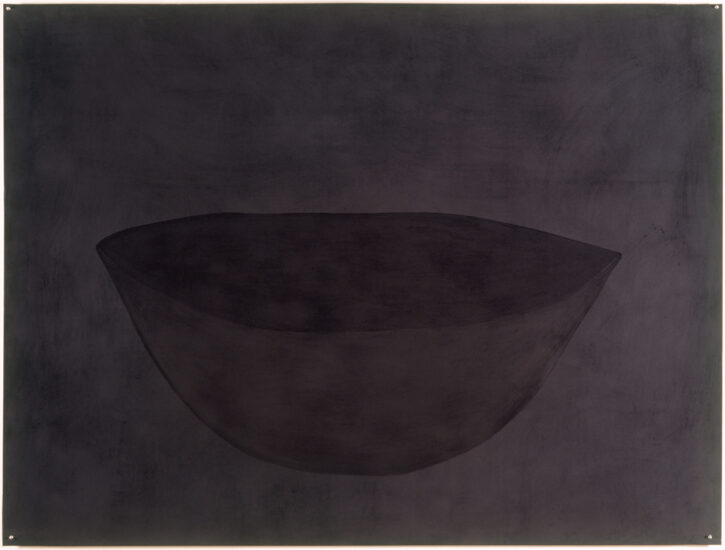
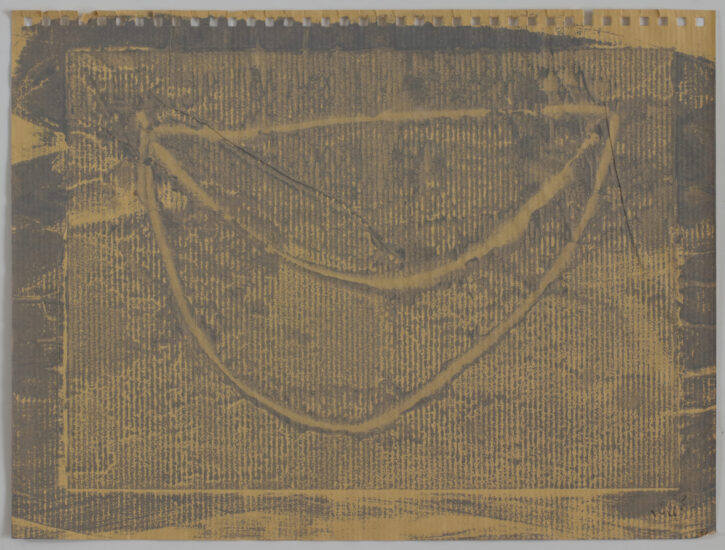
Sanpitak gained recognition in the early 1990s for her iconic breast forms, and by decade’s end she had inverted the motif into a vessel, an evolution that broadened her reflections on the female self and motherhood into a wider investigation of the human form and of humanity. On view in Qatar will be two large-scale drawings, Vessel 1 (2000) and Vessel 4 (2000), each depicting a floating form suspended in a black field. These are important early drawings of a motif the artist would return to repeatedly in the decades to come, echoing the alms bowl used by Buddhist monks: a humble devotional object that receives offerings each day and represents interdependence, community, and impermanence. Complementing these is a suite of six monoprints on paper from her Vessels series (2000), each a subtle variation on the others.
Also on view will be Balancing Act 24 (2024), a kinetic installation composed of twenty-four antique Indian water vessels, each poised atop a motorized plinth. These formerly utilitarian, colorful metal forms are reanimated through a gentle rocking motion. At the mouth of each vessel, a delicate stack of hand-dyed mulberry paper forms the silhouette of a breast. Their constant movement reflects Sanpitak’s belief that balance is not a fixed state but a dynamic condition.